How to Set Up a “Private Cloud” at Home Using TrueNAS: Bypassing Subscription Fees for Good
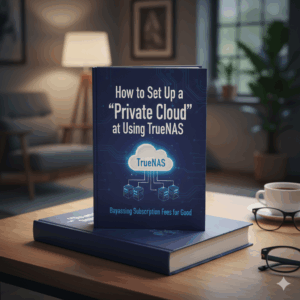
How to Set Up a “Private Cloud” at Home Using TrueNAS: Bypassing Subscription Fees for Good
However, over time, these recurring payments pile up and undermine long-term control over personal or commercial data. Cloud services that are based on subscriptions have become the default solution for storage, backups, and file synchronization despite the fact that they have become the default option. A strong option is a private cloud that is established at home using TrueNAS. This cloud gives you the ability to own your infrastructure, manage your storage, and keep complete control over your data. If the hardware and settings are set up correctly, a home private cloud may provide greater performance, privacy, and cost effectiveness than commercial services while still matching many of the capabilities that are offered by commercial providers.
A Comprehensive Explanation of What a Private Cloud Actually Is
File storage, synchronization, backups, and remote access are some of the cloud-like services that may be provided by a private cloud, which is basically a host-based system that operates independently. In contrast to public cloud platforms, which store your data on servers owned by a third party, a private cloud operating system is based on hardware that you have direct control over. Because of this, you will have full control over the manner in which data is kept, accessed, and protected. The operating system that is responsible for transforming a standard personal computer or server into a robust storage and service platform that is able to handle numerous users, devices, and applications is known as TrueNAS as it functions.
Why TrueNAS Is the Best Choice for Cloud Systems in the Home
When it comes to network-attached storage and private infrastructure use cases, TrueNAS was developed exclusively for such applications. Despite the fact that it is a system that can operate on consumer hardware, it provides enterprise-grade capabilities like as data redundancy, snapshots, encryption, and user access control. The ZFS file system, which safeguards data against corruption and offers automated integrity checks, is one of the most significant features of this system. This means that your files are not only kept locally, but they are also actively safeguarded against silent failures and hardware difficulties. This is especially beneficial for home users and freelance photographers.
How to Determine Which Hardware Is Best for TrueNAS
The selection of suitable hardware is the first step in the process of establishing a dependable private cloud. A dedicated computer with adequate random access memory (RAM), a CPU that is reliable, and numerous storage devices for redundancy are all necessities for a basic system. Because file caching and integrity checks are mainly dependent on random access memory (RAM), a storage server is able to profit from more memory in contrast to ordinary desktop use. Using numerous drives in a setup that is either mirrored or parity-based assures that your data will continue to be available even in the event that one of the drives dies. With this, a basic personal computer may be transformed into a robust personal data center.
TrueNAS Installation & Configuration, Including
After the hardware has been prepared, the installation of TrueNAS is a simple procedure that consists of booting from the installation disk and designating the system drive. The setup process takes place via a web-based interface once the installation has been completed. This interface allows you to configure storage pools, user accounts, and network settings. You are able to control all elements of your private cloud with the help of this single dashboard, which eliminates the need for sophisticated command-line procedures. In a matter of minutes, the system will become available from any device that is connected to your local network. It will serve as the foundation of your privately owned cloud infrastructure.
Putting in Place Cloud Functions and Providing Remote Access
File sharing, synchronization, and remote access services are all supported by TrueNAS, which allows users to enjoy the same level of convenience as commercial cloud systems. You have the ability to establish versioned backups, create shared folders for many users, and even view data remotely using secure connections. With the right setup, your private cloud will function without any problems across mobile devices such as laptops, phones, and tablets. This will enable you to access and synchronize files in real time without having to depend on third-party services. This results in a cloud experience that is completely functional, but one that is wholly under your control while maintaining its functionality.
The Strategies for Security and the Protection of Data
Among the most compelling reasons in favor of a private cloud is the issue of security. TrueNAS gives you the ability to encrypt storage, limit user rights, and isolate services inside the network for your convenience. Because your data is never allowed to leave your infrastructure until you specifically provide permission for it to do so, the possibility of data leaks from third parties is avoided. With the addition of firewall rules and consistent upgrades, a home private cloud becomes substantially more secure than the majority of consumer cloud services. Independent contractors that deal with client files, financial information, or sensitive company data will find this to be a very useful feature.
Benefits in terms of both performance and cost over time
The performance of a private cloud serves as one of the most significant benefits of operating one. Because the speeds of local networks are far greater than those of internet-based cloud services, file transfers are completed more quickly and with less delay. However, after the hardware has been acquired, the only recurring expenditures that are incurred are those associated with energy and the periodic replacement of drives. When compared to monthly membership rates that increase in proportion to the amount of storage space, the cost of using a private cloud drops significantly over time. The majority of installations are able to completely pay for themselves within one or two years.
Construction of Digital Independence Over the Long Term
It is not only about saving money when you use TrueNAS to create a private cloud; it is also about achieving digital freedom. There is no longer any connection between you and the alterations in price, storage restrictions, or policy adjustments that are enforced by other platforms. Even if there is a disruption in internet connectivity, your data will continue to be accessible, and you will have control over the length of time files are saved and who may see them. A home private cloud signifies a change toward ownership, privacy, and sustainable personal infrastructure that can expand with your requirements for years to come. This transition is occurring in a society that is becoming more reliant on centralized services.