The Best IT Practices for Managing a “Bring Your Own Device” (BYOD) Policy in 2026
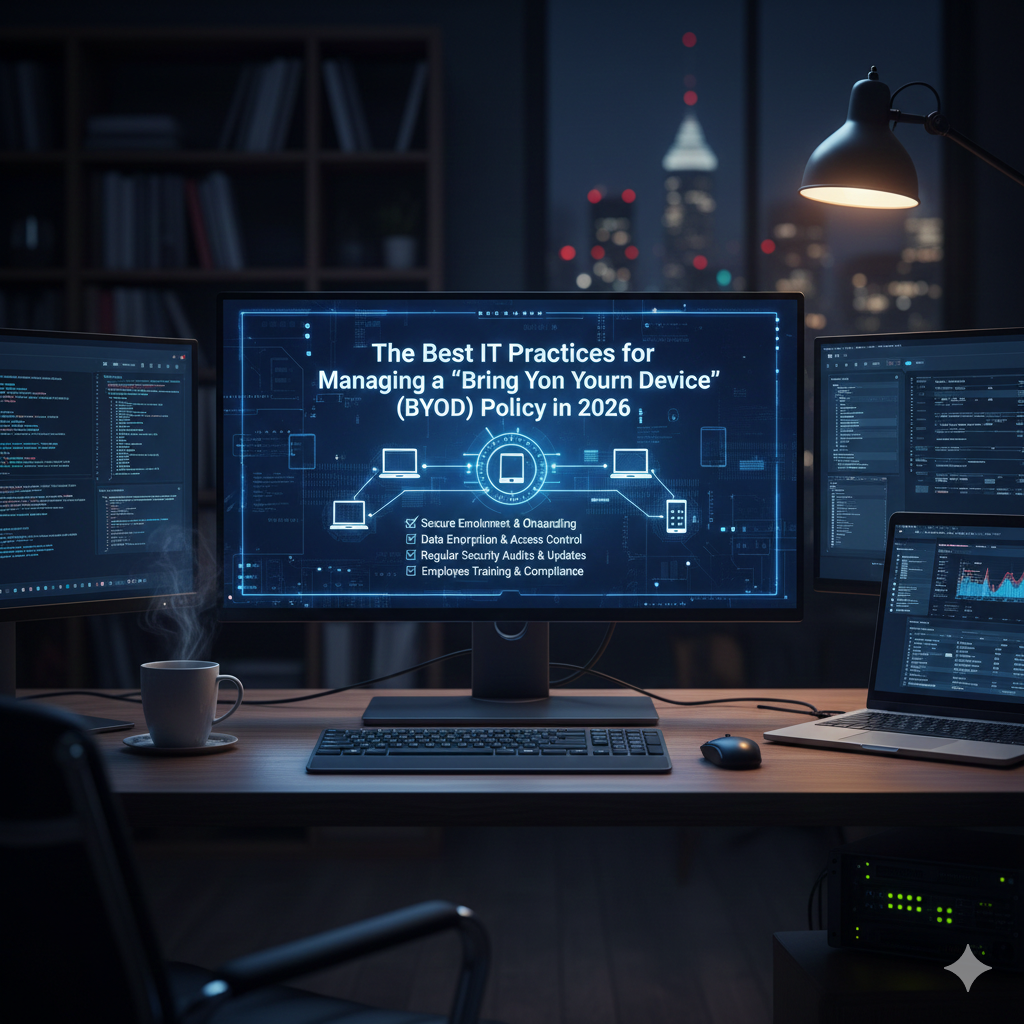
The Best IT Practices for Managing a “Bring Your Own Device” (BYOD) Policy in 2026
The adoption of Bring Your Own Device (BYOD) rules has become the norm in contemporary businesses, particularly in light of the growing prevalence of remote and hybrid work arrangements. Providing workers with the opportunity to use their own personal devices for work purposes may improve flexibility, convenience, and job satisfaction; nevertheless, it also presents issues in terms of administration, compliance, and security. To ensure data safety, device integrity, and smooth access to corporate resources in the year 2026, IT teams will need to strike a compromise between the freedom of employees and the implementation of stringent safeguards. Bring-your-own-device (BYOD) strategies that are well-designed not only decrease dangers but also preserve productivity and operational efficiency.
Acquiring Knowledge of the Bring Your Own Device Landscape
A dual-use environment is created via bring-your-own-device (BYOD) policy, in which personal and business data coexist on a same device. This arrangement presents a number of distinct security issues, such as the existence of the possibility of data leakage, the exposure of malware, and the unintended sharing of sensitive information. It is beneficial for employees to use devices that they are already acquainted with; nevertheless, IT teams need to create techniques to retain supervision without intruding on employees’ privacy. It is necessary to know how to strike a balance between usability and security in order to be able to develop a policy that is in accordance with the objectives of the company and the needs of the regulatory bodies.
Clearly Outlining the Policies and Procedures
A well-defined and well-documented policy serves as the bedrock upon which a Bring Your Own Device (BYOD) program is built. When it comes to compliance, employees should be aware of which devices are allowed, which corporate resources may be used, and the duties that are involved with compliance compliance. Defining authorized usage, security standards, and the repercussions for infractions should be the responsibility of policies. The establishment of clear rules helps to eliminate ambiguity and minimize misunderstandings, therefore providing a foundation for both workers and IT teams. While simultaneously establishing standards for responsibility, transparency helps to cultivate trust.
Establishing Robust Controls for Public Access
Bringing your own device (BYOD) situations need careful control of identity and access. For the purpose of ensuring that only authorized users are able to access business applications and data, multi-factor authentication (MFA) is used. Permissions are restricted to the bare minimum necessary for each employee’s tasks via the use of role-based access restrictions, which reduces the risk of exposure in the event that devices are hacked. The identification of odd behavior is facilitated by the continuous monitoring of access patterns. Effective access control rules strike a compromise between convenience and security, allowing workers to do their jobs more efficiently while simultaneously safeguarding critical organizational assets.
Protecting Electronic Devices and Information
Device security is an essential component of bring-your-own-device (BYOD) management. The use of endpoint security software, the implementation of regular system upgrades, and the encryption of sensitive data are all effective measures to avoid malware infestations and illegal access. It is possible for information technology teams to enforce security setups, remotely delete devices that have been lost or stolen, and monitor compliance with the help of systems such as mobile device management (MDM) or unified endpoint management (UEM). An enterprise may preserve its flexibility while limiting the dangers that are inherent in bring-your-own-device (BYOD) installations by safeguarding both the corporate and personal environments without excessively restricting personal usage.
Educating Staff Members on the Most Effective Security Procedures
Human mistake is something that cannot be completely protected against by even the most effective technology systems. Training on phishing awareness, secure password management, application vetting, and safe network use should be provided on a regular basis to employees. In addition to fostering a culture of security consciousness, awareness programs emphasize the significance of adhering to bring-your-own-device (BYOD) rules. Employees that are well-informed serve as an extra line of protection, lowering the probability of security breaches that are the consequence of negligent conduct or a lack of understanding.
Observation and Acting in Compliance
Continuous monitoring is necessary in order to guarantee compliance with bring-your-own-device policies and identify possible dangers at an early stage. Tracking the state of device security, application use, and access patterns is something that IT teams should do. Notifications that are automated for devices that do not comply with regulations or suspicious activities allow for preemptive response before situations become more serious. The statutory requirements that are associated with data privacy should also be taken into consideration during compliance inspections, particularly in situations when personal devices access sensitive information about customers or employees. The Bring Your Own Device (BYOD) program is kept safe and in line with the requirements of the business by continuous supervision.
The Struggle Between Control and Privacy
Bring-your-own-device (BYOD) initiatives are required to guarantee business security while also respecting the privacy of employees. There should be a clear delineation between personal data and business data in the regulations governing information technology. This will ensure that monitoring and management tools only access information that is connected to work. Trust may be built by open and honest communication about what is monitored, why it is monitored, and how the data is utilized. The maintenance of this equilibrium supports employee engagement in bring-your-own-device (BYOD) initiatives without causing friction or raising worries about privacy.
Getting Ready for the Future of Bring Your Own Device
As new gadgets, trends in remote work, and new risks emerge, the Bring Your Own Device (BYOD) ecosystem continues to undergo change. With the support of developing technologies like confidential computing, AI-assisted monitoring, and zero-trust access frameworks, enterprises will be able to maintain their competitive advantage by routinely assessing their policies, upgrading their security measures, and embracing these technologies. In the year 2026, freelancers and IT teams that proactively adopt bring-your-own-device (BYOD) policies offer safe, flexible, and efficient work environments that are beneficial to both workers and the company. These environments also minimize the hazards that are connected with the use of personal devices in professional settings.