The Guide to “Green IT”: How to Reduce Your Company’s Server Energy Consumption and Carbon Footprint
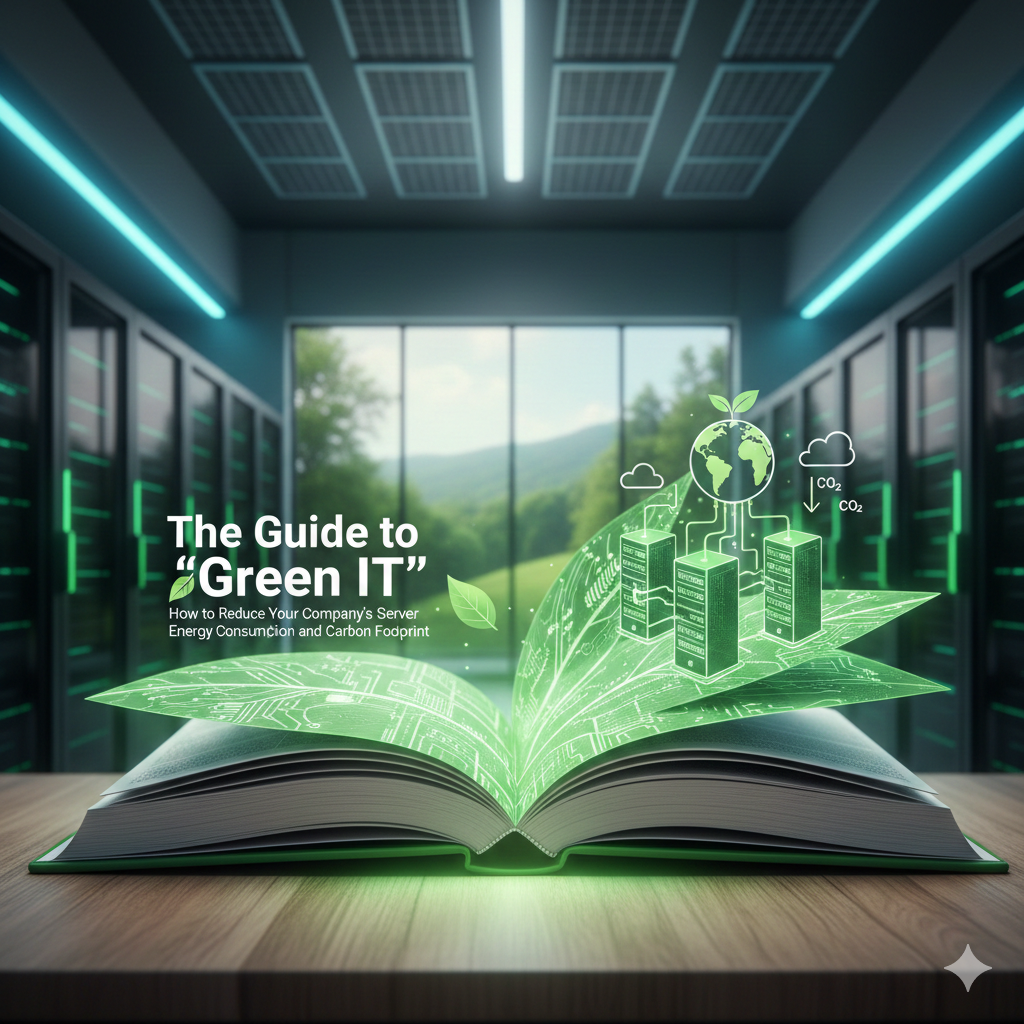
The Guide to “Green IT”: How to Reduce Your Company’s Server Energy Consumption and Carbon Footprint
A large amount of focus has been placed on lowering the amount of energy that is used by information technology infrastructure as sustainability becomes an essential corporate issue. Servers, data centers, and cloud services all make a significant contribution to the carbon footprint of an organization, particularly when the firm is running inefficient hardware or over-provisioned systems. In the field of information technology, green IT places an emphasis on tactics that optimize energy usage, improve hardware efficiency, and promote behaviors that are ecologically responsible. Through the use of these measures, firms have the ability to decrease their operating expenses, fulfill the requirements of regulatory agencies, and exhibit corporate responsibility, all while preserving high-performance computing environments.
Comprehending the Effects of Information Technology Infrastructure on the Environment
Infrastructure for information technology, and servers in particular, is a significant source to both energy usage and carbon emissions. A significant quantity of power is used by high-density server racks, cooling systems, and workloads that are always operating. This electricity is often derived from grids that are carbon demanding. Even servers that are not being used take electricity, which results in a wasteful expenditure of energy. The first step in putting green information technology plans into action is to have an understanding of these environmental implications. In order to get insight into issue areas and the ability to select solutions that bring both ecological and financial advantages, businesses that measure their energy use and the emissions that are linked with it.
Monitoring the use and effectiveness of the server
An in-depth analysis of the workloads and utilization rates of the servers that are currently in use is the first step in reducing energy usage. A great number of firms run their servers in an inefficient manner, with the hardware being underutilized or being left running continually without being optimized. Insights into the use of the central processing unit (CPU), memory, and storage are provided by performance monitoring tools, which also suggest prospects for consolidation or load balancing. It is possible for information technology teams to decommission superfluous systems or reallocate resources by identifying servers that are underused or redundant. This allows them to achieve significant savings in energy consumption while preserving service quality.
The implementation of virtualization and optimization of cloud computing
The ability to execute different workloads on a single physical server is made possible by virtualization, which results in a considerable increase in resource efficiency. In conjunction with cloud optimization tactics, businesses are able to dynamically scale their resources, hence decreasing the amount of energy wasted and idle capacity. Cloud service providers often supply technology that is more energy-efficient and different alternatives for renewable energy, both of which may further decrease carbon footprints. When workloads that are acceptable are moved to environments that are virtualized or hosted in the cloud, it guarantees that computer resources are utilized effectively while also reducing the burden on the environment.
Investing in Energy-Efficient Products and Equipment
Generally speaking, older servers and storage devices are less efficient than the technology that is now available. The consumption of electricity may be reduced without a corresponding reduction in performance by making investments in energy-efficient CPUs, low-power storage, and improved cooling gear. Power capping, dynamic voltage scaling, and innovative cooling technologies are some of the features that enable data centers to alter their energy usage in accordance with the number of workloads they are experiencing. Upgrades to hardware provide a long-term solution for sustainable information technology operations, which, in addition to enhancing efficiency, significantly reduce operating expenses.
Achieving Optimal Cooling and Layout for the Data Center
One of the most important contributors to the overall energy usage of a data center is the air conditioning systems. Using intelligent cooling controls, optimizing airflow, and adopting hot/cold aisle confinement are all ways to significantly cut down on the amount of power that is used. The use of liquid-cooled solutions, the utilization of free cooling approaches, and the adjustment of temperature thresholds are all further ways to increase efficiency. There is a balance between performance and sustainability when servers are designed with the appropriate physical architecture and environmental controls. This ensures that servers function at acceptable temperatures without using an excessive amount of energy.
Participating in Software Practices That Are Energy-Aware
Server energy consumption is also affected by the design of software and the scheduling of workloads. The consumption of energy may be reduced by optimizing the code for computational efficiency, scheduling jobs that need a lot of processing power during off-peak hours, and reducing background processes that are not essential. The use of monitoring tools allows information technology teams to observe software-induced energy trends and change workloads appropriately. The effect of green information technology efforts is amplified when software optimization and hardware efficiency are combined. This results in a reduction in both energy consumption and operating expenses.
Calculating and Reporting One’s Carbon Footprint Report
Continuous monitoring and reporting are required in order to quantify the effect of green information technology initiatives. Calculating energy use, converting it into carbon emissions, and monitoring progress over time are all important steps for organizations to take. This data should be reported both internally and publicly in order to strengthen responsibility and support the aims of the corporation regarding sustainability. In order to link information technology operations with larger environmental goals, metrics are helpful in identifying areas that might benefit from additional optimization and demonstrating success to stakeholders.
Developing a Culture of Information Technology That Is Sustainable
It is necessary to instill a culture of sustainability across the firm, including among the IT departments, in order to achieve long-term success in lowering energy use. It is possible to create continual improvement by training teams to take energy efficiency into consideration while making purchases, designing systems, and managing workloads. It is important to promote the concepts of green information technology by encouraging employees to become aware of power management, virtualization techniques, and responsible hardware usage. By incorporating sustainability into their day-to-day information technology operations, businesses have the power to lessen their carbon footprint, improve their energy efficiency, and set an example for environmentally responsible technology management.