How to Build a “Silent PC”: The Best Fanless Cases and Passive Cooling Components for 2026
How to Build a “Silent PC”: The Best Fanless Cases and Passive Cooling Components for 2026
The construction of a quiet personal computer is no longer only a specialized pastime for hobbyists; rather, it has become a realistic aim for professionals and home users who place a high value on a non-noisy environment. In 2026, developments in low-power central processing units (CPUs), efficient graphics processing units (GPUs), and high-quality passive cooling technologies have made it feasible to operate powerful computers without the need of conventional fans. The elimination of auditory disturbances, the reduction of dust intake, and the creation of a more comfortable workplace for activities such as writing, coding, audio production, and general productivity are all associated with a quiet personal computer. In contrast to traditional construction methods, which depend on a number of rotating components, silent systems concentrate on the dissipation of heat via the use of vast surface areas and airflow pathways that have been optimized. Prior to making component selections, it is vital to have a solid understanding of the design concept underlying fanless computing.
A Comprehensive Understanding of the Fundamentals of Passive Cooling
A passive cooling system is one that does not rely on forced airflow but rather on natural heat transfer. Large heatsinks and metal surfaces are responsible for the dissipation of heat into the surrounding air. Heat is transferred away from components via the process of conduction. Panels made of thick metal are often used in the construction of fanless cases because they serve as large heat spreaders. Through the use of heat pipes and thermal plates, interior components are connected directly to the construction of the casing. Due to the absence of moving parts, this design enables heat to escape without any noise. When it comes to a quiet construction, the most important issue is the design of the case since the efficacy of passive cooling is dependent on the surface area, the quality of the material, and the temperature of the surrounding environment.
Finding the Right Central Processing Unit for a Quiet System
In the majority of quiet PC designs, the central processing unit (CPU) is the main generator of heat. The optimal processors are those that have a high efficiency and low power consumption since they produce less heat while yet keeping appropriate performance. The modern central processing units are intended to dynamically scale both the voltage and frequency, which enhances their thermal behavior while working with light workloads. It is possible to achieve smooth performance without producing an excessive amount of heat output by selecting a processor that has a reasonable number of cores and a high single-core efficiency. A further reduction in power usage and heat production is achieved by undervolting. The basis for a system that is both reliable and completely quiet is a central processing unit (CPU) that has been properly selected.
Fanless Case Design and Development of Thermal Engineering
Fanless enclosures are fundamental to the building of quiet personal computers. These cases are designed to operate as enormous heat sinks, and they often make use of thick aluminum frames and exterior fins in order to achieve the most possible amount of heat dissipation. The components found on the inside are attached directly to thermal plates, which are responsible for transferring heat into the case walls. In certain designs, central processing units (CPUs) and graphics processing units (GPUs) are connected to exterior surfaces via the use of modular heat pipe systems. In place of only being a container, the whole enclosure transforms into a device that provides cooling. The quality of the case has a direct bearing on the amount of performance that the system is able to maintain without experiencing thermal throttling.
Solutions for Passive Cooling of the CPU
CPU coolers that are passive make use of heatsinks that are excessively large and have dense fin structures and many heat pipes. Without the help of circulation, these coolers are intended to effectively distribute heat around the space. It is vital to have the appropriate mounting pressure and thermal paste of good quality in order to achieve efficient heat transmission. When it comes to passive coolers, proper alignment is often required in order to enable natural convection to move heat upward. Despite the fact that they are physically enormous, they have an exceptionally high level of dependability since there are no moving parts in them. The CPU temperature remains consistent even when the workload is maintained thanks to a passive cooler that has been placed correctly.
The Available Options for Silent Power Supplies and Storage
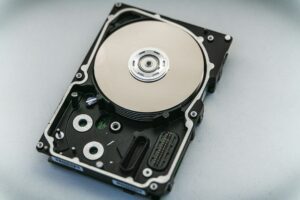
When power sources and storage devices are not properly chosen, they have the potential to produce noise. Fanless power supply are able to function without the need for internal fans since they are designed with great efficiency and huge heatsinks. As a result of the complete absence of mechanical noise, solid-state storage (SSD) is an essential component for quiet construction. Acoustic resonance and vibration are removed from the system when spinning hard drives are removed from the equation. The reduction of electrical noise and heat generation is another benefit of high-quality power transmission. The quiet ecology is finished off with these components, which eliminate any and all noise sources that were left behind.
How to Control Heat Without Using Airflow
In the absence of fans, heat control is dependent on the strategic arrangement of components and the orientation of the casing. The natural heat dissipation of the system is improved when it is positioned in a room that has enough ventilation. In order to reduce heat accumulation, it is important to avoid confined locations and bright sunlight. Convection is often improved by vertical case orientation because it enables hot air to ascend in a normally occurring manner. The monitoring of temperatures guarantees that the components will continue to operate within the safe thresholds. In passive systems, environmental awareness is required because the temperature of the surrounding environment plays a more significant impact than it does in conventional fan-cooled systems.
Performance Expectations for Computers That Are Silent
PCs that are silent put an emphasis on efficiency rather than brute performance. The thermal headroom of actively cooled systems is not something that can be matched by these systems; nonetheless, they are more than capable of handling duties related to development, media consumption, light creative labor, and productivity. It is possible to get outstanding performance with modern low-power technology while adhering to strict thermal limits. In the event that excessive sustained loads are applied, thermal throttling may take place; nevertheless, this is a trade-off that is a part of the design for quiet. The performance-to-noise ratio is something that is far more useful to the majority of consumers than the highest benchmark results.
Is It Worth It to Construct a Silent Personal Computer in the Year 2026?
In 2026, the pinnacle of efficiency-focused computing is represented by quiet personal computers. In addition to having no moving parts, they have a greatly decreased amount of dust formation, which contributes to their unparalleled dependability. Silent builds provide an improved experience for those who operate in locations that are mostly quiet or who want systems that are free of distractions. Long-term advantages exceed the trade-offs, despite the fact that component prices may be greater and performance constraints may be present. A noiseless personal computer that has been thoughtfully built offers a one-of-a-kind mix of comfort, durability, and contemporary performance that cannot be replicated by conventional systems.